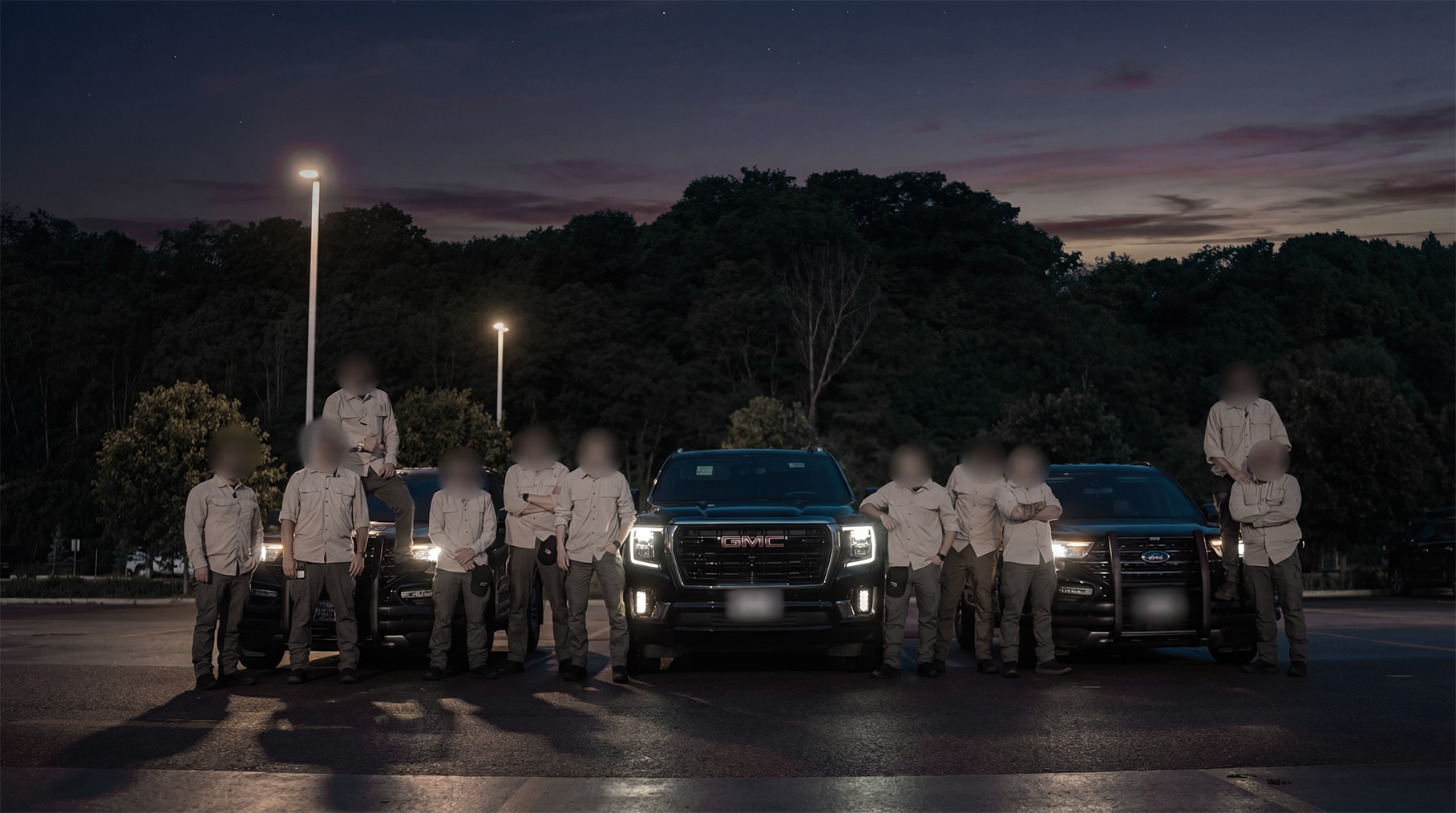
Explore how professional security presence, strategic patrol patterns, and tactical visibility reshape criminal decision-making in Toronto's elite neighborhoods and private estates.
January 9, 2026
Crime is fundamentally a decision-making process. Before any criminal act occurs, there exists a moment of calculation where the potential perpetrator weighs opportunity against risk, reward against consequence. Understanding this psychological threshold is the foundation of effective deterrence theory, and it's precisely where modern private security creates its most powerful impact.
Criminologists have long understood that most crimes are not spontaneous acts of passion but calculated decisions based on perceived opportunity. The rational choice theory of crime suggests that criminals conduct informal risk assessments before acting. They evaluate three critical factors: the likelihood of success, the potential reward, and the probability of being caught and punished.
In Toronto's affluent neighbourhoods like Rosedale, Forest Hill, and Bridle Path, this calculus becomes particularly relevant. These areas represent high-value targets where potential rewards are substantial. Without effective deterrence, the equation tips dangerously in favour of criminal action. But when professional security presence enters the picture, the entire calculation transforms.
The most immediate psychological impact comes from visible security presence. A marked security vehicle conducting methodical patrols through a neighbourhood sends multiple powerful signals. First, it indicates that someone is watching and that the area is protected. Second, it suggests resources have been invested in protection, implying additional layers of security that may not be immediately visible. Third, it creates uncertainty in the criminal's mind about the sophistication and response capability of the security system.
Research in environmental criminology has consistently demonstrated that criminals avoid targets with clear signs of protection. Studies examining burglary patterns found that homes with visible security measures experienced 300% fewer break-in attempts than comparable unprotected properties. The deterrent effect extends beyond the individual property to create what security professionals call a "halo effect," where neighbouring properties benefit from proximity to protected sites.
But visibility alone is not sufficient. The quality of that visibility matters enormously. A security guard sitting in a vehicle scrolling through their phone creates a very different psychological impact than a professionally trained officer conducting systematic observation and documentation. Criminals are often experienced in evaluating security quality. They can distinguish between security theatre and genuine protection.
Effective deterrence requires more than static presence. It demands strategic movement and unpredictability. Professional security operations employ randomized patrol patterns specifically designed to create uncertainty. When patrol timing and routes become predictable, sophisticated criminals simply adjust their timing to exploit gaps.
In Toronto's residential areas, this means varying patrol schedules, alternating routes, and conducting randomized stationary observations at different locations. The goal is to create a psychological state where potential criminals can never be certain when and where security personnel will appear. This uncertainty acts as a powerful deterrent because it dramatically increases the perceived risk.
Advanced security operations integrate multiple deterrence layers. Vehicle patrols are supplemented with foot patrols, allowing security professionals to observe details that might be missed from a vehicle. They conduct what's known as "broken windows" monitoring, noting and reporting minor issues like graffiti, broken lights, or abandoned vehicles. This signals to potential criminals that the area is carefully watched and that nothing goes unnoticed.
While overt deterrence has its place, the most sophisticated security operations understand the power of subtle visibility. This approach is particularly important for high-net-worth clients who value discretion but require robust protection.
Subtle visibility means security personnel who dress appropriately for the environment, who conduct observations without obvious surveillance behavior, and who integrate naturally into the community fabric. In an upscale Toronto neighbourhood, this might mean security professionals dressed in business casual attire, driving unmarked but distinctive vehicles, and conducting their duties with a level of professionalism that reassures residents while warning potential threats.
The psychological impact of this approach is nuanced but powerful. It tells potential criminals that protection is present but leaves them uncertain about its full extent. This uncertainty is itself a deterrent. A burglar casing a property may notice a professionally dressed individual conducting slow, methodical drives through the area. Is this private security? A resident? An off-duty police officer? The ambiguity creates hesitation, and hesitation prevents crime.
Security presence serves a territorial function similar to what we observe in nature. Just as animals mark and defend territory, visible security operations establish and reinforce boundaries. This isn't about aggression but about clear communication: this space is protected, monitored, and defended.
Professional security teams understand this dynamic and use it strategically. Regular patrols establish routine patterns that residents recognize and find reassuring while signalling to outsiders that the area has dedicated protection. Security vehicles parked in strategic locations during high-risk periods create temporary "watch posts" that deter criminal activity in their immediate vicinity.
This territorial aspect is particularly effective in private estates and gated communities. When security personnel conduct regular foot patrols, interact professionally with residents and visitors, and maintain visible logs and documentation, they're not just observing—they're actively establishing that the territory is claimed, controlled, and defended.
One of the most overlooked aspects of deterrence psychology is how professional conduct amplifies deterrent impact. A security officer who is alert, fit, well-groomed, and conducts themselves with calm authority creates a very different impression than someone who appears inattentive or unprofessional.
This professionalism signals competence and capability. It suggests training, resources, and backing. A potential criminal observing a security professional who moves with purpose, maintains situational awareness, and communicates professionally is forced to recalculate their risk assessment significantly upward.
In practical terms, this means security teams must be selected and trained not just for their technical skills but for their ability to project appropriate authority. Former military and law enforcement personnel often excel in this regard because they've been conditioned to maintain professional bearing under pressure and to conduct themselves in ways that naturally command respect.
Modern deterrence extends beyond physical presence to include intelligence gathering and pattern analysis. Professional security operations document incidents, track suspicious activity, and analyze trends. This intelligence capability creates additional deterrent value.
When security personnel are observed taking detailed notes, photographing suspicious vehicles, or conducting systematic documentation, it sends a clear message: information is being collected, patterns are being analyzed, and evidence is being preserved. For criminals, this creates the uncomfortable awareness that their actions are being recorded and could be used to identify and prosecute them later.
In Toronto neighbourhoods where OZINT operates, this intelligence-led approach has proven particularly effective. By tracking vehicle movements, noting unusual patterns, and sharing intelligence with law enforcement when appropriate, security teams create a multilayered deterrent web that makes criminal activity increasingly risky and difficult.
Consider a practical example from Toronto's Bridle Path area. Prior to implementation of professional security patrols, the neighbourhood experienced a series of high-end vehicle thefts and burglary attempts. Criminals had identified the area as a target-rich environment with slow police response times due to distance from stations.
When comprehensive security patrols were introduced, the initial deterrent effect was immediate. Marked security vehicles conducting regular patrols, combined with foot patrol observations and intelligence gathering, created immediate uncertainty for criminals. Within the first month, suspicious vehicle activity decreased by approximately 60%.
More significantly, over a six-month period, actual criminal incidents dropped by over 80%. The few attempts that did occur were quickly detected and responded to, reinforcing the message that the area was protected. Word spread through criminal networks that this particular neighbourhood had become a high-risk target, creating a lasting deterrent effect that extended beyond the immediate security presence.
Toronto presents specific challenges for deterrence-based security. The city's size, diverse neighbourhoods, and complex urban geography create varied threat landscapes. High-value residential areas are often located in proximity to commercial districts and transit corridors, providing criminals with access routes and escape options.
Effective deterrence in this environment requires understanding of local criminal patterns and methods. Toronto has seen increases in organized auto theft rings, sophisticated home invasion teams, and property crime networks. These groups are more calculating and risk-aware than opportunistic criminals, requiring more robust and sophisticated deterrent measures.
Professional security operations address this by maintaining current intelligence on local crime trends, adapting patrol patterns to address emerging threats, and coordinating with law enforcement to share information about suspicious activity. This intelligence-led deterrence creates a dynamic response that evolves with the threat landscape.
While deterrence primarily targets potential criminals, it has an equally important psychological impact on residents and clients. Visible, professional security presence creates a sense of safety and wellbeing that enhances quality of life.
This psychological benefit extends beyond security itself. Residents who feel safe are more likely to enjoy their property, maintain active lifestyles, and engage with their community. Children play more freely, families gather outdoors, and property values tend to stabilize or increase. The security presence becomes part of the community fabric, contributing to overall neighbourhood vitality.
For private estates and individual properties, this psychological component is often as valuable as the physical protection provided. High-net-worth individuals invest substantial resources in creating comfortable, luxurious living environments. The knowledge that professional security is maintaining watch allows them to enjoy these investments without constant underlying anxiety about threats.
While deterrence prevents most criminal activity, comprehensive security recognizes that some threats may not be deterred. Professional operations prepare for this reality by maintaining response capabilities that extend beyond prevention to intervention and resolution.
This means security personnel are trained and equipped to respond effectively if deterrence fails. They maintain communication systems for rapid coordination, have established protocols for law enforcement engagement, and possess the tactical training to manage incidents safely and effectively.
The knowledge that security presence includes response capability adds another layer to deterrent psychology. It's one thing to know an area is watched. It's quite another to know that any criminal attempt will be met with immediate, professional, and effective response.
Effective security operations measure their impact through multiple metrics. The most obvious is incident reduction, tracking crimes prevented through before-and-after comparisons. But sophisticated operations also measure leading indicators: suspicious activity reports, criminal reconnaissance attempts detected, and patterns of vehicle or foot traffic that suggest potential threats.
In Toronto's high-end security market, clients increasingly expect data-driven demonstrations of value. Professional operations provide regular reporting that documents patrols conducted, incidents observed and managed, and trend analysis showing how security presence is actively deterring threats.
This transparency builds trust and demonstrates that security investment is producing measurable results, not just creating a sense of security but actually reducing real risk.
The psychology of deterrence represents the foundation of effective security. By understanding and leveraging how criminals make decisions, professional security operations prevent crime before it happens, protecting clients, property, and communities without the trauma and disruption that comes with managing actual criminal incidents.
In Toronto's evolving security landscape, this deterrence-first approach has proven both effective and efficient. It represents the highest form of security success: threats prevented, not just threats managed. For private estates, family protection, and community security, there is no more valuable service than ensuring that criminal intent never translates into criminal action.
At OZINT Security, our approach to deterrence combines Israeli tactical expertise with deep understanding of Toronto's unique security environment. Our teams don't just patrol, they create psychological barriers that reshape criminal decision-making, protecting your family, property, and peace of mind through proactive prevention rather than reactive response.


